Peacetime vs. Wartime: Which Kind of Leader Are You Right Now?
Every business cycles between peacetime and wartime. The best leaders know which mode they're in and adapt their leadership style to match. Which one are you?
Matt Radicelli
Coach & Advisor
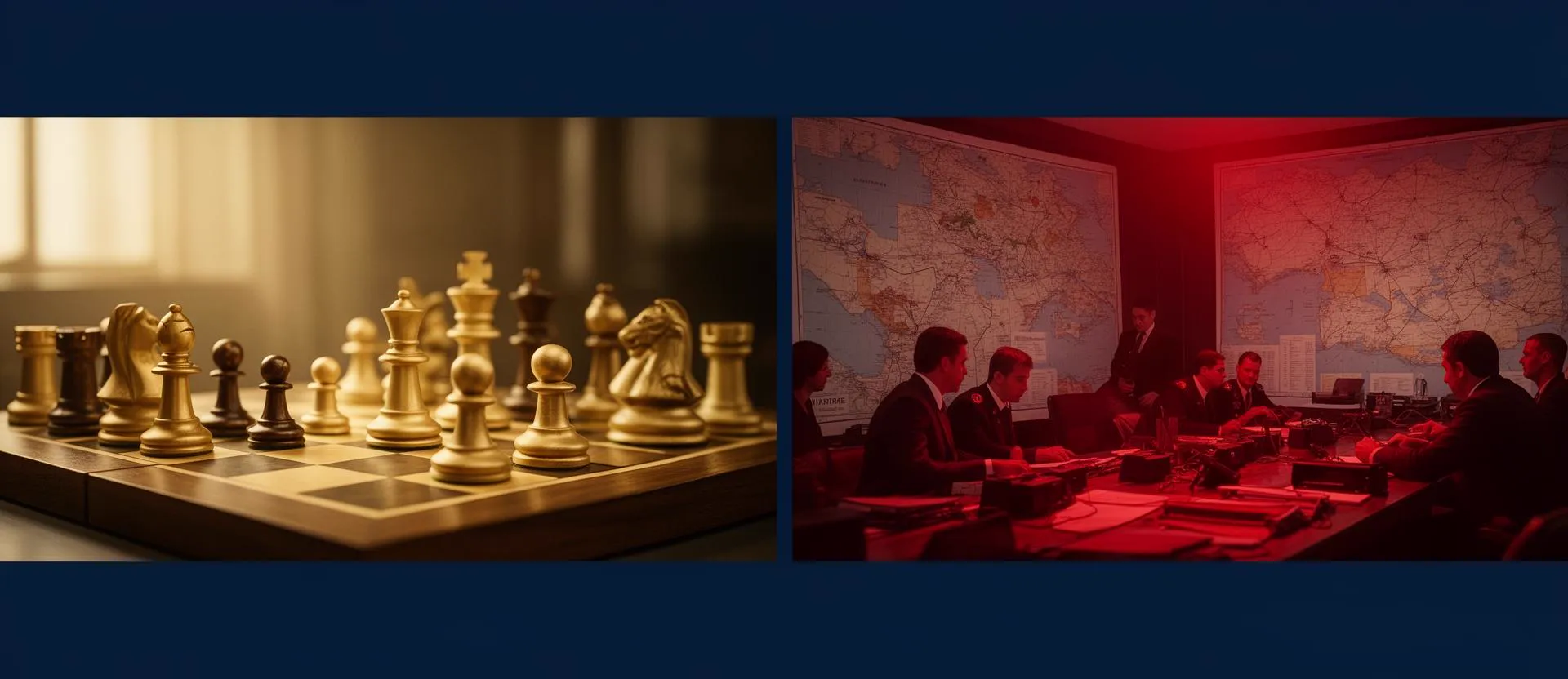
One of my favorite movies of all time is The Godfather.
I know that might sound like an odd place to start a business blog. But stay with me.
What Francis Ford Coppola did with that script is remarkable. Underneath all the drama, the loyalty, the betrayal... There are real business and leadership lessons woven into almost every scene. Lessons about succession and trust. About what it actually means to lead when the stakes are high.
And one of the concepts that hits me every time I watch it is the distinction between a peacetime and a wartime consigliere.
In the film, the consigliere is the advisor. The strategist who helps the Don make decisions.
But the movie makes something clear. What you need from your advisor in peacetime is completely different from what you need in wartime.
Peacetime calls for careful thinking, long-term planning, diplomacy, and vision. Wartime calls for urgency, decisiveness, ruthlessness when necessary, and the ability to execute under pressure.
Same role. Completely different requirements.
And I've been thinking about this for years in the context of business leadership. Because the same thing is true of every leader, CEO, and business owner.
The Two Modes Every Business Operates In
Every business cycles between two distinct states.
Wartime is when you're in the thick of it. Could be a peak season. Or crisis. Or a major growth push. The kind of months where you're heads-down, reactive, executing, and fighting fires. There's no time to think strategically because the business demands all of you right now.
Peacetime is when the pressure lifts. The slower months or off-season. The stretch between big projects. This is when you have bandwidth again. When you can breathe and can actually work on the business instead of just in it.
Leaders recognize these seasons. What they don't do, but should, is lead differently in each one.
Why the Same Leadership Style Doesn't Work in Both
Here's what I see constantly with business owners: They spend wartime reacting and executing, which is right. That's what wartime requires.
But then peacetime comes, and they keep operating in wartime mode. Still reactive and putting out fires that aren't there. Still running at 100 miles an hour on a road with no traffic.
And they waste it.
Or the opposite happens. A wartime CEO who's brilliant at peacetime planning and strategy suddenly finds themselves in a crisis, and they freeze. They want to plan. They want to think. They want to have more information before they act.
The business needs them to move. And they can't switch gears.
Neither of these is a character flaw. They're just a mismatch between what the moment requires and what comes naturally to that leader.
The Peacetime CEO vs. The Wartime CEO
Let me break down what each mode actually looks like.
The Peacetime CEO
In peacetime, great leaders:
- Think long-term and strategically
- Document, systematize, and build processes
- Develop their team through training and mentorship
- Plan for the next busy season before it arrives
- Fix the things that broke during the chaos
- Make deliberate decisions with time to think
- Build culture and relationships
- Set and pursue the big vision
This is the season for deliberate, purposeful work. Not urgency or chaos. Just intentional progress.
The Wartime CEO
In wartime, great leaders:
- Make fast decisions with incomplete information
- Prioritize ruthlessly... not everything gets attention, only what matters
- Communicate with urgency and clarity
- Execute relentlessly and expect the same from their team
- Adapt quickly when the plan meets reality
- Stay calm under pressure so the team can follow their lead
- Accept that some things will break and keep moving anyway
This is the season for speed, clarity, and execution. Not strategy. Not deliberation. Action.
Which One Are You Naturally?
What I've observed over years of working with business owners and leaders is that people have a natural state. One mode they slip into easily, almost automatically.
Some people come alive in wartime. The chaos energizes them. The pressure sharpens their thinking. They make their best decisions when the stakes are highest and time is shortest.
Put them in peacetime and they get restless. They create urgency where there isn't any. Or move too fast when slow and deliberate would serve them better. They solve problems before they're fully understood because sitting still feels like failing.
Other people are the opposite. They're brilliant in peacetime. Strategic, thoughtful, visionary. They build extraordinary things when given the space and time to think.
Put them in wartime and they struggle. They want more information before deciding. Or consensus when the business needs a decision. They're still planning while the competition is executing.
Neither is better. Both are valuable. But knowing which one you are, and which mode your business is currently in, is critical.
The worst thing that can happen is a wartime leader trying to run a peacetime operation. Or a peacetime leader trying to manage a crisis.
Right Now, For Most of You, It's Peacetime
If your business has any seasonality at all, and most do, there's a good chance you're in a peacetime window right now.
Summer is coming. The busy season is on the horizon.
Which means you have a finite window to do the things that wartime makes impossible.
This is the time to:
Build the systems you kept promising yourself you'd build.
The ones that will make your busy season smoother, faster, and less chaotic than last year.
Document what only lives in someone's head.
Your best people know things that aren't written down anywhere. If they leave or get sick during the busy season, you're exposed.
Fix what broke last time.
You made a mental note during your last crunch. You said "I'll fix this when things slow down." Things have slowed down. Fix it.
Develop your team.
Peacetime is when great leaders invest in the people around them. Training, cross-training, coaching, honest conversations about performance and direction.
Think about where you're going.
Not just what's on fire today, but what do you actually want this business to look like in 12 months? What do you need to build now to get there?
The wartime leader in you might be itching to create urgency. To push for revenue... Run at full speed even when the road is clear.
Resist it.
Use this window the way it's meant to be used.
The peacetime decisions you make right now will determine how well you handle the wartime that's coming.
The Switch You Have to Make
The best leaders aren't the ones who are great at peacetime or wartime.
They're the ones who know which mode the moment requires, and can switch.
That's not easy. It requires self-awareness. Honesty about what comes naturally to you and what you have to consciously work at.
But it's one of the most important skills a leader can develop.
The business will cycle between these modes whether you're ready or not.
The question is whether you'll be leading it intentionally or just reacting to whatever the season brings.
Your Leadership Tune-Up
Before the busy season hits, ask yourself these questions:
- Which mode am I naturally in? Peacetime or wartime?
- Which mode is my business in right now? And is my leadership style matching it?
- What would a great peacetime leader do with the next 30 days? What would they build, fix, document, or develop?
- Am I ready to switch when wartime arrives? What's my plan for leading differently when the pressure comes back?
You don't need to be perfect at both. You just need to be aware of which one the moment is asking for.
And right now? It's asking for peacetime.
Use it well.
At Mentor Pods, we help business owners think through their leadership approach and build the systems that make busy seasons more manageable. If you're ready to lead with more intention, let's start a conversation.

Matt Radicelli
Founder & Lead Advisor
Matt Radicelli built Mentor Pods after spending 15 years scaling businesses and realizing the loneliest seat in the room was always at the top. He created the peer-advisory model he wished existed when he needed it most.
Q4 2026 Pods
Join a curated group of entrepreneurs who meet weekly to share real challenges, test ideas, and hold each other accountable.
Start a Conversation