Vistage Advisory Groups vs EO Forums: Facilitation, Feedback, and Accountability
Vistage and EO both connect business leaders with peers, but their approach differs. Compare facilitation, feedback, and accountability before choosing your room.
Matt Radicelli
Coach & Advisor

Comparing peer groups? Start with our full comparison.
You can be surrounded by people all day and still have nobody to talk to about the business.
Your team needs direction. Your partner deserves a conversation that isn't another rundown of staffing problems. And your friends may not understand why a strong sales month can still leave you worried about payroll.
That's the appeal of a peer group. A place to bring the decisions you can't work through alone.
But not every group helps you in the same way.
If you're comparing Vistage and Entrepreneurs' Organization, commonly called EO, the useful question isn't which brand is better. It's how each room works, and whether that approach matches the support you need.
Both can provide valuable peer perspective. Their differences become clearer when you look at who guides the conversation, how members respond to challenges, and what happens after you leave.
Vistage advisory model vs EO forums: the core distinction
Broadly, Vistage's core chief executive peer advisory model combines a professionally facilitated group with coaching from a Vistage Chair. Members bring business challenges into a structured setting for questions, perspective, and input from other leaders.
EO Forum generally centers on a confidential, member-led peer group. A trained member moderator guides the process, and participants emphasize sharing relevant personal experiences rather than telling another member what to do.
That distinction matters.
Vistage leans toward professionally facilitated business advisory and coaching. EO Forum leans toward moderated peer experience sharing that can span business and personal life.
Neither description captures every group. Vistage has different offerings, and an EO Forum is only one part of the broader EO membership experience. Local practices, individual leaders, and group culture affect what participation actually feels like.
Treat this comparison as a starting point. Confirm current membership requirements, costs, meeting expectations, and support directly with each organization.
| Dimension | Vistage's core chief executive model | EO Forum |
|---|---|---|
| Facilitation | A professional Chair guides the group | A trained member moderator guides the process |
| Discussion style | Structured issue exploration with questions and peer input | Experience sharing rather than prescriptive advice |
| Coaching | Chair coaching is generally part of the core model | Individual professional coaching is not the defining Forum component |
| Conversation scope | Primarily business leadership, with personal context where relevant | Business, personal, and family experiences can all have a place |
| Accountability | Chair follow-up and group commitments can support action | Member commitments and group norms shape follow-through |
| Key factor to evaluate | The Chair's approach and the group's relevance | The moderator's skill and the Forum's culture |
Facilitation: who helps you get beneath the first answer?
Imagine you own an event production company. Bookings are growing, but every important decision still comes back to you.
You bring a question to the group: Should I hire an operations manager?
A useful conversation shouldn't jump straight to job descriptions.
Someone needs to ask what the role would own. Whether your margins support the hire. Whether your current team lacks capability or simply lacks permission to make decisions.
And whether you actually intend to let go.
In Vistage, the Chair has a dedicated professional facilitation role. That can be valuable when you want someone responsible for challenging assumptions, keeping the discussion productive, and connecting a group conversation to your individual leadership work.
In EO Forum, the moderator is a participating peer who helps uphold the discussion process. The structure is designed to let members explore meaningful experiences without turning the room into a contest over who has the best advice.
Professional facilitation doesn't automatically guarantee a stronger conversation. Member-led facilitation doesn't automatically mean a casual one.
The real test is whether the person guiding the room can create both trust and useful challenge.
Ask how the group handles dominant voices, uncomfortable topics, and a member who keeps bringing back the same unresolved issue.
Feedback: recommendations or relevant experience?
This is one of the most important differences in the Vistage advisory model vs EO forums comparison.
In an advisory setting, members may help examine options, question a plan, and offer perspectives on possible actions. The business owner still owns the decision, but direct input is part of the value.
EO Forum's experience-sharing approach takes a different route. Rather than prescribing your next move, another member describes a relevant situation they faced, what they did, and what happened.
For example, consider a photographer deciding whether to add an associate team.
An advisory conversation might explore:
- Whether demand supports additional capacity.
- How to price work delivered by an associate.
- Which quality standards need to be documented.
- What risks deserve a small test before expansion.
An experience-sharing conversation might reveal how another owner struggled to separate their personal reputation from their company's brand, or how their first delegation attempt exposed expectations they had never explained.
Both can change the decision. They work differently.
Direct input can help when you need to evaluate a concrete operating choice. Experience sharing can help you recognize blind spots without feeling pushed toward somebody else's answer.
The risk of advice is borrowing a solution without understanding its context. The risk of experience sharing is hearing something meaningful but never translating it into action.
Ask yourself: Do I need help evaluating options, understanding my own patterns, or both?
Accountability: what happens after the conversation?
A productive meeting and a changed business are not the same thing.
You can leave with pages of notes and still spend the next month avoiding the conversation with your sales manager.
In Vistage's core model, the combination of group discussion and Chair coaching creates opportunities to revisit decisions and commitments. That can appeal to owners who want an ongoing coaching relationship alongside peer input.
In EO Forum, follow-through is shaped more by the group's practices, member commitments, and willingness to revisit what matters. A strong Forum can create substantial personal accountability, but you shouldn't assume that means professional coaching or formal business performance tracking.
Neither structure does the work for you.
Before joining any group, ask:
- How are commitments made? Is the next action specific, or does everyone leave with good intentions?
- How are they revisited? Does someone ask what happened?
- What happens when a member gets stuck? Does the group explore the obstacle or simply move on?
- What support exists outside the group discussion? Clarify what membership actually includes.
The strongest accountability isn't someone scolding you. It's someone noticing the gap between what you said mattered and where your attention went.
Business problems don't always stay inside business boundaries
Sometimes a pricing problem is a costing problem.
Sometimes it's fear of rejection.
Sometimes an owner says the business needs better systems when the harder issue is that they don't trust anyone else to make a decision.
That's why conversation scope matters.
EO Forum explicitly makes room for experiences beyond company performance. For an entrepreneur whose business and personal life are tightly connected, that breadth can be valuable.
Vistage discussions can also address personal leadership challenges, while its core advisory proposition is more directly oriented toward executive effectiveness and business decisions.
Don't reduce this to business versus feelings. Leadership requires both operational clarity and self-awareness.
Instead, consider what you need to discuss honestly. Then ask how the group makes space for it without losing purpose.
Evaluate the actual room, not just the model
The Vistage advisory model vs EO forums question becomes more useful when you move from organizational descriptions to specific group dynamics.
A respected name can't tell you whether you'll trust the people sitting beside you.
For an event business owner, relevant context might include seasonal cash flow, contractor management, or the challenge of delivering several events at once. For an agency owner, it might be project margins, scope creep, and client concentration.
Your peers don't all need to share your industry. Different industries can provide valuable perspective. But members should be willing to understand the economics and constraints behind your decisions.
Look for:
- Relevant complexity. Can peers understand the leadership challenges you're facing?
- Confidentiality. Are expectations clear and taken seriously?
- Candor without performance. Can members admit mistakes without turning every conversation into a success story?
- Enough space to contribute. Will you participate meaningfully rather than mostly listen?
- A workable commitment. Can you consistently show up prepared?
Ask what you can learn about the group before committing, while respecting the confidentiality of existing members.
Where peer advisory and coaching work together
Peer advisory broadens your perspective. Coaching can help you turn that perspective into a decision, a behavior change, or a practical next step.
Together, they can shorten the distance between recognizing a problem and doing something about it.
At Mentor Pods, we bring peer community, business frameworks, coaching, and structured accountability together. Our pods are small, curated groups where owners can connect the discussion to the work of running their companies.
That might mean examining per-event costs before changing a DJ company's packages. Or clarifying decision authority before a venue owner makes another management hire.
The point isn't to collect more opinions. It's to make a better decision and follow through.
Whether you choose Vistage, EO, or another approach, look for support that fits how you learn and what your business needs now.
Choose the room where you can tell the truth, hear something useful, and leave knowing what you'll do next.
This is exactly the kind of thing our members work through together. If you're curious what that looks like, let's talk... no pitch, just a conversation. Get in touch.
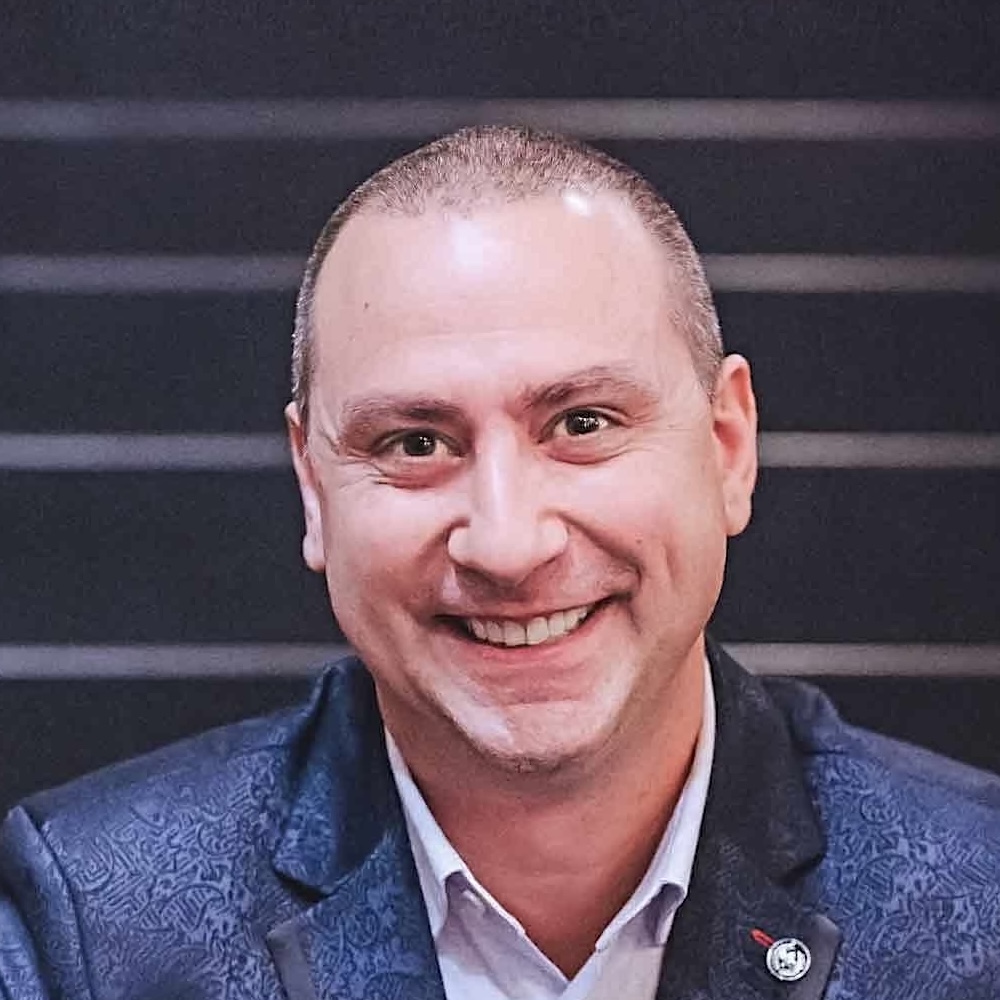
Matt Radicelli
Founder & Lead Advisor
Matt Radicelli built Mentor Pods after spending 15 years scaling businesses and realizing the loneliest seat in the room was always at the top. He created the peer-advisory model he wished existed when he needed it most.
Q4 2026 Pods
Join a curated group of entrepreneurs who meet weekly to share real challenges, test ideas, and hold each other accountable.
Start a Conversation