The Complimentary Upgrade: How the Best Businesses Turn Problems Into Moments Clients Remember
The best businesses don't just handle problems. They engineer moments that make clients more loyal than if nothing had gone wrong. Here's the playbook.
Matt Radicelli
Coach & Advisor
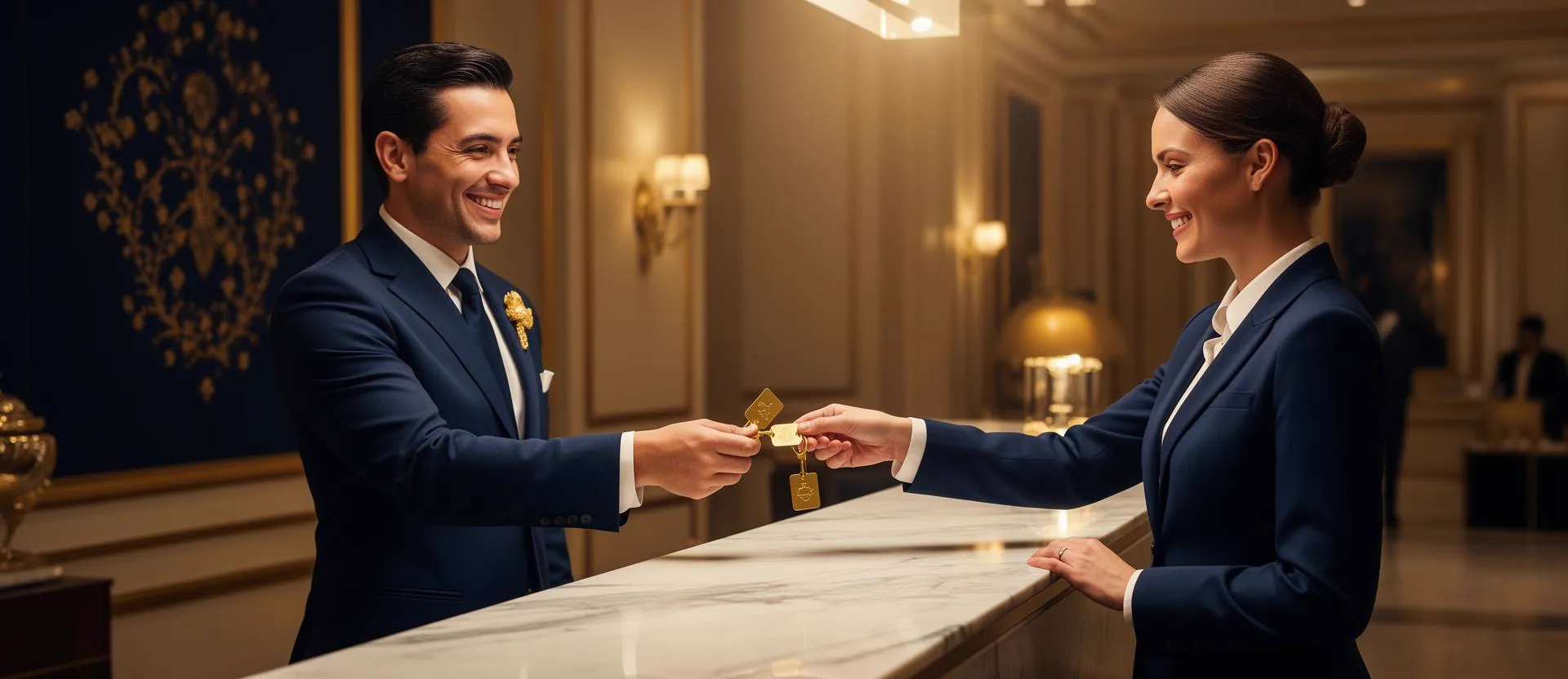
"Good news! We didn't have the compact car you reserved, so we've upgraded you to a midsize at no extra charge."
We've all heard some version of this. At the rental counter. At a hotel. And every time, it feels like a small win.
You walk away feeling like you got lucky. Like the universe did you a favor.
But here's what's actually happening, and once you see it, you can't unsee it.
They planned for this.
The Strategy Behind the "Accident"
The rental car company didn't accidentally run out of compacts.
They intentionally overbook the cheaper inventory. They know a certain percentage of reservations won't show. And they know that the customers who do show up would rather get a free upgrade than hear "sorry, we're out."
The hotel didn't accidentally have your room unavailable. They know that "you've been upgraded to a suite" creates a story you'll tell people. A reason to come back. A moment that earns loyalty no loyalty program can buy.
This isn't accidental customer service. It's an engineered delight.
And the lesson for your business is hiding in plain sight.
The Real Question
Every business deals with problems. Timelines slip. Capacity gets stretched. Things break. People get sick. Vendors fall short.
You can't eliminate that. No matter how well you run your business, something is going to go sideways at some point.
So the question isn't how do you avoid problems. It's "What do you do when they happen?"
There are two kinds of businesses.
The ones that get caught off-guard, apologize, and manage the fallout.
And the ones that have planned for the inevitable, communicate proactively, and turn the moment into something their clients didn't expect.
One of those businesses loses trust when things go wrong. The other builds it.
What the Upgrade Actually Requires
The upgrade strategy isn't about framing or spin. It's about preparation.
You can't offer an upgrade if you don't have something genuinely equal or better ready to go.
The rental car company can upgrade you because they have midsize and full-size cars sitting in the lot. The hotel can move you to a suite because they manage their inventory to make that possible.
If they tried to "upgrade" you to something worse and just called it an upgrade, you'd see through it immediately. And that breaks trust faster than just being honest.
So the foundation of this strategy is simple. Have quality alternatives already in place before you need them.
That means thinking through your most common failure points and building real solutions for each one before the problem happens.
Four Things to Build Into How You Operate
1. Identify your most common failure points
Where do things most often go wrong in your business? Where do timelines slip? Where does capacity get stretched? What breaks most often?
Be honest. Don't optimize for the best case. Optimize for what actually happens.
2. Build quality alternatives for each one
For every common failure point, you should have an answer ready. Not a scramble. An answer.
If a key team member is unavailable, who's the backup and how do you position them as an upgrade?
If a timeline needs to shift, what can you offer to make the client feel like they're getting more, not less?
If a product or tool isn't available, what's the alternative that's equal or better?
These aren't conversations to have at the moment. They're decisions you make in advance, when you're thinking clearly.
3. Communicate before they ask
The worst time to tell a client about a problem is when they're already frustrated.
The best time is the moment you know something is changing before they notice, before they ask, before the expectation has been broken without explanation.
"I wanted to reach out personally to let you know about a change we're making..."
That sentence positions you as proactive. Thoughtful. In control. Even when the news isn't perfect.
The same change communicated after the client notices it feels completely different. Now you're reacting. Apologizing. Managing.
Get ahead of it. Every time.
4. Frame it around their value, not your problem
How you present a change matters as much as the change itself.
"We have a problem and we need to make a substitution" and "we're upgrading your service" can describe the exact same situation.
One centers the experience around your operational failure. The other centers it around what the client is receiving.
Lead with what they're getting. Not with what went wrong.
"Due to a scheduling change, we're dedicating additional senior-level attention to your project this week to make sure everything is exactly right. No change in cost."
Same situation. Completely different experience.
The Non-Negotiable Rule
Let me be direct about the one thing that makes or breaks this strategy.
The upgrade has to be real.
If you're delivering something worse and calling it better, people know. They always know. And the damage to trust is significantly worse than just being straight with them would have been.
This strategy only works when:
- The alternative is genuinely equal or better
- The framing reflects real additional value
- You're communicating proactively, not reactively
- The client walks away feeling like they got more than expected
If those conditions aren't met, don't use the framing. Just be honest. Clients can handle honesty. What they can't handle is feeling like they were managed or misled.
The Mindset That Changes Everything
A lot of businesses treat problems as things to minimize, apologize for, and recover from.
The best businesses treat problems as moments to prove what they're made of.
Your clients don't remember every transaction. They remember the moments. The ones where something went wrong and you handled it so well that they walked away more impressed than if nothing had gone wrong at all.
That's the customer recovery paradox. When you handle a problem better than expected, loyalty often increases because of how you handled it.
The rental car upgrade works because it flips the experience from disappointing to delightful. From "that's not what I asked for" to "I can't believe I got that for free."
Your business can do the same thing.
Not by manufacturing problems. But by being ready for the ones that are coming anyway, and having planned exactly how to turn them into something worth remembering.
What to Do This Week
Pick your top three failure points. The things that most commonly go wrong in your business. For each one, answer this:
- What's the quality alternative I could offer?
- How would I frame it as an upgrade?
- At what point do I communicate it to the client?
Write it down and make it a plan. Train your team on it.
The next time something goes sideways, you don't want to be figuring it out on the fly.
You want to execute the plan you already made.
And give your client a story worth telling.
At Mentor Pods, we help business owners build the systems and thinking that turn everyday operations into competitive advantages. If you're ready to stop reacting and start leading, let's start a conversation.

Matt Radicelli
Founder & Lead Advisor
Matt Radicelli built Mentor Pods after spending 15 years scaling businesses and realizing the loneliest seat in the room was always at the top. He created the peer-advisory model he wished existed when he needed it most.
Q4 2026 Pods
Join a curated group of entrepreneurs who meet weekly to share real challenges, test ideas, and hold each other accountable.
Start a Conversation